
The Feasts – What do they foreshadow?
The Old Testament is full of signs that point to the arrival of Jesus the Messiah or (in Hebrew) Yeshua Hamashiach. Some of them are obvious, such as the well-known prophecies from Isaiah that we read every Christmas. But did you know that the seven holy days of Israel contain prophetic significance in regard to the first and second coming of Jesus? Let’s take a closer look. Leviticus 23:4 says, “These are the appointed times of the Lord, holy convocations which you shall proclaim at the times appointed for them.” The rest of the chapter goes on to describe seven annual feasts when God’s people were to worship, repent, celebrate, and reflect on His provision. Observant Jews still celebrate these appointed times today.
So why is it important to study the feasts of Israel today? In Colossians 2, verses 16 and 17, Paul says that these feasts “are a mere shadow of what is to come; but the substance belongs to Christ.” Paul is making the point that these Biblical feasts are directly linked to the Messiah, and to me that makes them worth studying, even though we are not under the Law today.
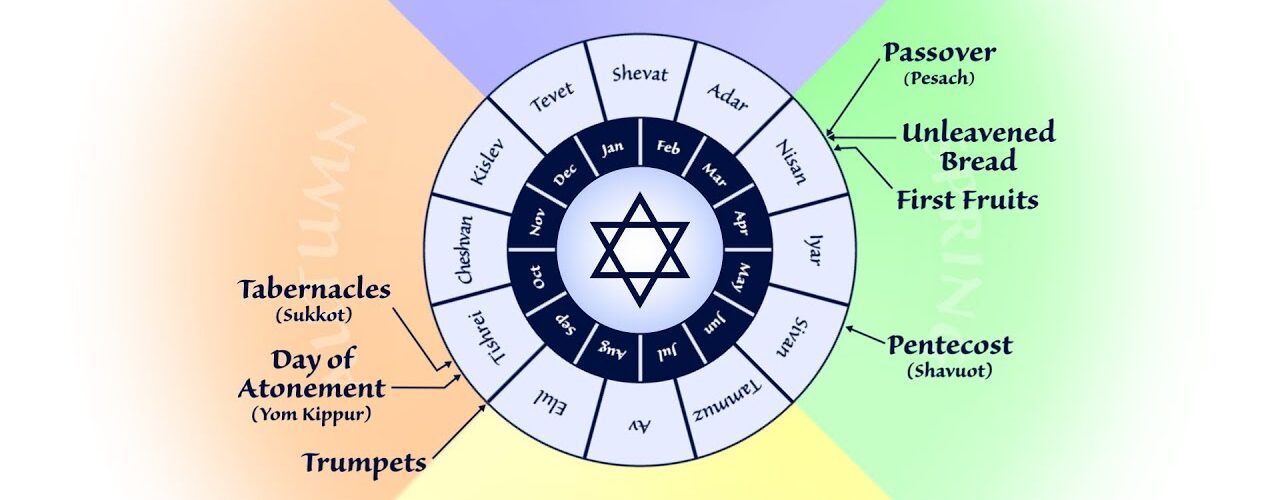
The feasts can be grouped into two categories: the Spring Holy Days and the Autumn Holy Days.
– The Springs Feasts include: Passover, Unleavened Bread, First Fruits, and Pentecost
– The Autumn Feasts include: The Feast of Trumpets, The Day of Atonement, and Tabernacles
You may have heard these feasts called by other names, which we’ll mention later on. What do these feasts foreshadow? Well, this is where things get interesting.
The four spring feasts were all specifically fulfilled in the crucifixion, resurrection, and the outpouring of the Holy Spirit that we read about in the Gospels and the book of Acts. But it wasn’t enough for God to merely fulfill the prophetic meaning of each feast; He orchestrated events so that each one was fulfilled on the exact day of the feast! God’s Word is incredibly precise and accurate.
Spring Feasts – Let’s look at the spring feasts one by one:
– Passover (also called Pesach) begins at dusk on the 14th of Nisan and it commemorates the deliverance of the Children of Israel from slavery in Egypt. First Corinthians 5:7 says, “For Christ our Passover also has been sacrificed.” This holy day pointed to the coming Passover Lamb, the Messiah, who came to shed His blood for our sins.
– The Feast of Unleavened Bread, immediately following Passover, required that the Jews eat unleavened bread for seven days. In the Bible, yeast, or leaven, is a symbol for sin, and Jesus is pictured as the Bread of Life that has no sin, or “leaven”.
– The Feast of First Fruits was the day after the Sabbath following the Passover. It was a time to dedicate the very earliest part of the harvest to the Lord.
– Pentecost (also known as the Feast of Weeks or Shavuot) happened 50 days later. For Israel this was a celebration of the first full harvest of the year and it also commemorated the first giving of the Law on Mount Sinai.
Jesus’ First Coming
Now let’s look at the fulfillment of these four Spring Holy Days and how God ordained them to perfectly align with Christ’s first coming. Christ was crucified at the same time that the Passover lambs were being sacrificed.
That evening, Christ (a sinless offering) was buried while the Feast of Unleavened Bread commenced.
Then, Christ rose from the grave as the First Fruits of the Resurrection. In 1 Corinthians 15, Paul says, “But now Christ has been raised from the dead, the first fruits of those who are asleep.”
Fifty days later, on Pentecost, the Holy Spirit was poured out on the New Church gathered in Jerusalem. Remember what this feast celebrated? The harvest. How fitting that it initiated the harvest of souls in the Church Age. Also, the Holy Spirit of the New Covenant came on the same day as Moses had received the Law of the Old Covenant. Just another sign that our God is a God of order and precision!
After the spring feasts there is a period of three months before the fall feasts. This interval corresponds to the Church Age, which we are still in.
Autumn Feasts – Now let’s look at the autumn feasts:
– The Feast of Trumpets starts the Jewish new year (Rosh Hashanah) on their civil calendar. On the Biblical calendar, this started the seventh month (Tishri), when the priest would blow the shofar, the ram’s horn trumpet, to declare a day of rest and worship. Traditionally this begins a time of introspection and repentance, preparing for the new year and the upcoming Day of Atonement.
– The Day of Atonement (also known as Yom Kippur or the Highest of Holy Days) occurs nine days later, on the 10th of Tishri. This was the only day of the year that the High Priest entered the Holy of Holies. This day dealt with the sin of the nation, making atonement. Many of the feast days are days of rest, worship, and celebration. This feast is one of mourning and getting right with God.
– The Feast of Tabernacles (also known as Sukkot or the Feast of Booths) starts on the 15th of Tishri and lasts 7 days. It was a time of worship and festivities, during which the people lived in temporary booths, or tents, that they made out of branches. God said this was “…so that your generations may know that I had the sons of Israel live in booths when I brought them out from the land of Egypt.” This week-long feast also symbolizes the time of God dwelling with His people.
Jesus’ Second Coming
These three Autumn Feasts do not have a clear and specific prophetic fulfillment anywhere in history. However, they strongly correspond to the events of Jesus’ second coming. The Feast of Trumpets has often been seen as a foreshadowing of the Rapture. The Bible frequently mentions the sounding of the trumpets in descriptions of the Rapture. Also, the Rapture will be a time when the workers are called home from the harvest to a celebration. It’s interesting to note that because the first day of the month was determined by the first appearance of the new moon, no one knew exactly what day the Feast of Trumpets would take place until it happened. Does that sound familiar?
The Day of Atonement foreshadows the second coming of Christ and Israel getting right with their Messiah. Zechariah 12 and Romans 11 prophesy that Israel will recognize their rejection of the Messiah and come to faith in Him. Moreover, the theme of judgment corresponds to Jesus’ judgment of the nations upon His return.
Just as the Feast of Tabernacles follows the Day of Atonement, Jesus’ judgment of the nations will be followed by an extended time of celebration in which He dwells with us here on earth. This time is known as the Millennial Kingdom. Zechariah prophesied that during this time period, the entire world will celebrate the Feast of Tabernacles (or Booths). Zechariah 14:16 says, “Then it will come about that any who are left of all the nations that went against Jerusalem will go up from year to year to worship the King, the Lord of hosts, and to celebrate the Feast of Booths.”
Taken collectively, these seven feasts of Israel present a picture of God’s ultimate plan of redemption. It stands to reason that since Christ fulfilled the spring feasts literally and precisely, He will do the same for His second coming during the autumn Holy Days, which have yet to be fulfilled.
So how does this help us to live strategically? It’s one more reminder that God has a plan to finish what He started. And, although we cannot and should not set dates, the autumn feasts may provide valuable confirmation of end times events once they actually happen. The autumn feasts are signposts for the end times, and when God leaves a sign it is wise to pay attention!
The distinction between the spring feasts and the autumn feasts also highlights the contrast between the first coming and the second coming. Jesus came first as a sacrifice, but next time He’ll come as a King! First as a Lamb, next time as a Lion.
Also, the feasts of Israel are just a small part of the Jewish culture and history that can yield extraordinary insights to the serious Bible student. I encourage you to spend some time digging deeper into the Jewish roots of our Christian faith.
Get a FREE eBook called Awaiting His Return
Also, visit Jesus in the Old Testament. You will be amazed!
Home »